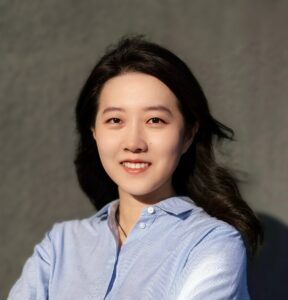
Yinong Zhou is an Assistant Professor in the Department of Physics at Auburn University. Before joining Auburn University, she was a Postdoctoral Scholar in the Department of Physics and Astronomy at University of California, Irvine from 2021 to 2024, advised by Prof. Ruqian Wu. She obtained her Ph.D. in Materials Science and Engineering at University of Utah in 2021, advised by Prof. Feng Liu and her B.S. in Applied Physics at University of Science and Technology of China (USTC) in 2016. Her research focuses on developing and applying density functional theory (DFT) simulations coupled with theoretical models to design and predict diverse nanomaterials and quantum materials and reveal their novel electronic, topological, magnetic, optical, and phononic properties. More information can be found on her group website: https://yinongzhou.github.io
Presentation Title:
Quantum Phases in Chiral and Superconducting Materials
Presentation Abstract:
Quantum materials exhibit intriguing electronic, magnetic, and optical properties, holding great promise to shape future electronic and spintronic technologies. I will show our approach to studying various quantum phases based on physics models and density functional theory (DFT) calculations. The talk will include two parts. First, structural chirality engenders a chiral-induced spin selectivity effect, which enables the harnessing of electron spin to open promising opportunities in spintronics and quantum technologies. I will showcase the realization of higher-dimensional spin selectivity in chiral crystals for controlling phase transition and spin-flipping processes [1,2]. Second, I will discuss how interfacial phonon bands and electron-phonon interactions are influenced by complex reconstructions and segregation at the FeSe/STO interface. A notable discovery is that the formation of an unusual interfacial structure plays an important role in the enhancement of Tc. Our research provides a layer-by-layer breakdown of the contributions of electron and phonon states to superconductivity [3].
[1] Y. Zhou, D.L.M. Cordova, G.M. Milligan, M.Q. Arguilla, and R. Wu, “Higher-dimensional spin selectivity in chiral crystals.” Phys. Rev. B. 110, 045434 (2024).
[2] D.L. Cordova, Y. Zhou, et al., M.Q. Arguilla, “Sensitive thermochromic behavior of InSeI, a highly anisotropic and tubular 1D van der Waals Crystal.” Advanced Materials: 2312597 (2024).
[3] H. Yang, Y. Zhou, et al., R. Wu, and X. Pan, “Phonon modes and electron-phonon coupling at the FeSe/SrTiO3 interface”, Nature 635, 332-336 (2024).