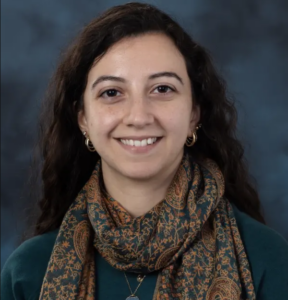
Dr. Sarah Chehade is a current technical project manager at the Washington Institute for STEM, Entrepreneurship, and Research (WISER). She received her Ph.D. in mathematics with a focus on quantum information theory from the University of Houston in 2021. Following this, she completed her postdoctoral research assistant appointment at Oak Ridge National Laboratory in the quantum computational science group, followed by a research appointment in the Quantum Center at the University of Tennessee, Chattanooga. Her research focuses on a mathematical understanding of quantum computational science, leveraging tools from operator theory, algebraic structures, and information science to understand fundamental quantum phenomena underlying entanglement, quantum computation and quantum dynamics. Beyond her research, Dr. Chehade is deeply committed to workforce development and broadening participation in quantum information science. She works to connect mathematically talented students with emerging opportunities in quantum technologies, has organized several Quantum Computing special sessions at various conferences.
Presentation Title:
Building Quantum Computing Infrastructures: Research, Collaboration, and Workforce Development
Presentation Abstract:
Quantum computing is rapidly advancing toward larger, application-driven workflows, yet realizing its full potential requires more than advances in scalability, hardware, and algorithms. Progress also depends on building the research infrastructure, collaborative partnerships, and skilled workforce needed to translate emerging technologies into real-world impact. This presentation introduces the Washington Institute for STEM, Entrepreneurship, and Research (WISER) and its approach to connecting students, academia, industry, and government through collaborative quantum research. We discuss how WISER supports projects in areas such as distributed quantum computing, quantum simulation, and benchmarking while creating pathways for the next generation of quantum researchers. By highlighting WISER’s model, this talk explores how collaborative research organizations can help bridge the gap between education, research, and practical quantum applications.