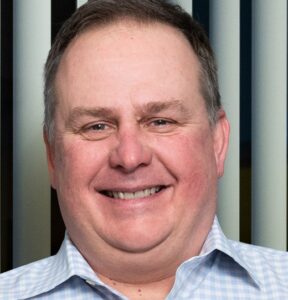
Dr. Kevin M. Obenland is a senior staff member in the Quantum Information and Integrated Nanosystems Group where he conducts quantum computing research focusing on the areas of quantum fault-tolerance and error correction, gate-level simulation of noisy physical quantum systems, and resource analysis of quantum algorithms and architectures.
Dr. Obenland joined MIT Lincoln laboratory in June 2015. Prior to this he worked at SAIC/Leidos where he led a small quantum computing theory effort focusing on quantum computing systems design and analysis. Dr. Obenland earned a PhD in Electrical Engineering from the University of Southern California and a BS in Computer Engineering from the University of Texas at Arlington.
Presentation Title:
Application Driven Evaluation of Fault-Tolerant Quantum Computing Architectures
Presentation Abstract:
The last year has shown many new proposals for scalable utility-scaled quantum computing architectures. These architectures are driven by the requirements of Quantum Error Correction (QEC) codes and the applications intended for these platforms. Including implementation details of QEC and applications, in the evaluation of architectural design trade-offs, will increase the fidelity of the assessments and enable co-design of the hardware with QEC and algorithm design. At Lincoln Laboratory we have developed the pyLIQTR framework, an application-driven set of tools supporting application implementation and architectural analysis. In this talk, I will describe pyLIQTR and then show an analysis across a wide range of application domains and emerging fault-tolerant architectures. Applications including: lattice spin dynamics and ground-state problems, chemical catalysis, NMR, and electronic structure systems. For architectures, we consider simple lattice-surgery based surface code architectures to architectures based on qLDPC codes.