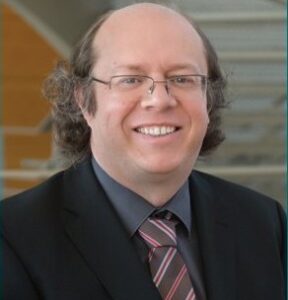
David Alan Tennant is an internationally recognized experimental physicist whose work has defined the modern field of quantum magnetism and established neutron spectroscopy as a quantitative science. His pioneering experiments provided the first direct tests of quantum field theory in condensed-matter systems and revealed new classes of emergent particles and symmetries in magnetic materials.
Tennant’s discoveries of spinon fractionalization, magnetic monopoles, and emergent E8 symmetry transformed the understanding of strongly correlated quantum matter. He developed the quantitative methods that made those discoveries possible—time-of-flight single-crystal neutron spectroscopy, advanced high-field and millikelvin techniques, and more recently, AI-assisted analysis and inverse modelling for neutron scattering. These innovations have redefined how complex materials are measured, interpreted, and designed.
His early work on low-dimensional quantum magnets laid the experimental foundation for today’s research on quantum simulation and quantum information materials, influencing developments from Kardar–Parisi–Zhang hydrodynamics to Google’s 2024 quantum simulation of non-equilibrium dynamics. At the University of Tennessee and Oak Ridge National Laboratory, Tennant leads efforts linking quantum materials, artificial intelligence, and high-performance computing through the DOE Quantum Science Center and the NSF-funded UTK Materials Research Science and Engineering Center. The second phase, QSC-II, extends this integration into hybrid quantum–HPC architectures, establishing UT–ORNL as a national model for AI-enabled quantum research.
Before returning to the United States, Tennant held senior roles in Europe, including C4 Professor and Head of Magnetism at the Technical University of Berlin and Helmholtz Center Berlin, where he co-founded the Helmholtz Zentrum Berlin by merging the neutron and x-ray facilities BENSC and BESSY II. As Chief Scientist at Oak Ridge National Laboratory (2013–2017), he led the transformation of the Spallation Neutron Source (SNS) from construction to full scientific operation, achieved DOE CD-1 for the Second Target Station, and helped secure the Proton Power Upgrade, completed in 2024. He currently chairs the national process guiding STS science case.
Tennant’s leadership has unified research ecosystems across continents—from Helmholtz and European infrastructures to U.S. national laboratories—strengthening regional and national roles in quantum science. He has mentored a generation of leading experimental physicists now at Oxford, PSI, TU Berlin, LANL, and Missouri, and continues to teach and lecture internationally on neutron methods and AI for scattering.
He is the recipient of the 2012 European Physics Prize (Condensed Matter), a Fellow of the Neutron Scattering Society of America, and the author of over 140 refereed papers (Google Scholar citations 13 400, h = 51, Aug 2025). His research combines experimental rigor with strategic vision—advancing the frontiers of quantum matter while building the institutional architectures that sustain discovery.
Presentation Title:
Spin Systems as Quantum Benchmarks
Presentation Abstract:
Quantum spin systems provide nearly ideal platforms for quantum networks, spanning a wide range of connectivities and spin anisotropies. Their quantum states can be precisely controlled using both commuting and non-commuting magnetic fields. Neutron scattering enables detailed insights into these systems in single-crystal samples, allowing reconstruction of ground and excited states. Such reconstructions can validate quantum field theories as well as classical and quantum computations and simulations. This work presents the methods, techniques, and illustrative examples, highlighting their significance for emerging quantum capabilities.