Session I: Quantum Networking: Architectures, Applications, and Scalable Links
Highlighting the critical role of Quantum Networking in enabling distributed quantum technologies across computing, sensing, and materials domains, the talks explore orchestration and middleware necessary for running quantum workloads across networked nodes, with a focus on latency, synchronization, and error correction. From a sensing perspective, the discussion covers entanglement distribution for time transfer, navigation, and high-energy physics—where high-fidelity links and ruggedized systems are essential. Advances in materials and photonic integration are also examined, emphasizing transduction, low-loss interfaces, and scalable, CMOS-compatible components that connect qubits to optical fiber. Together, these presentations chart a path toward a functional, scalable quantum internet.
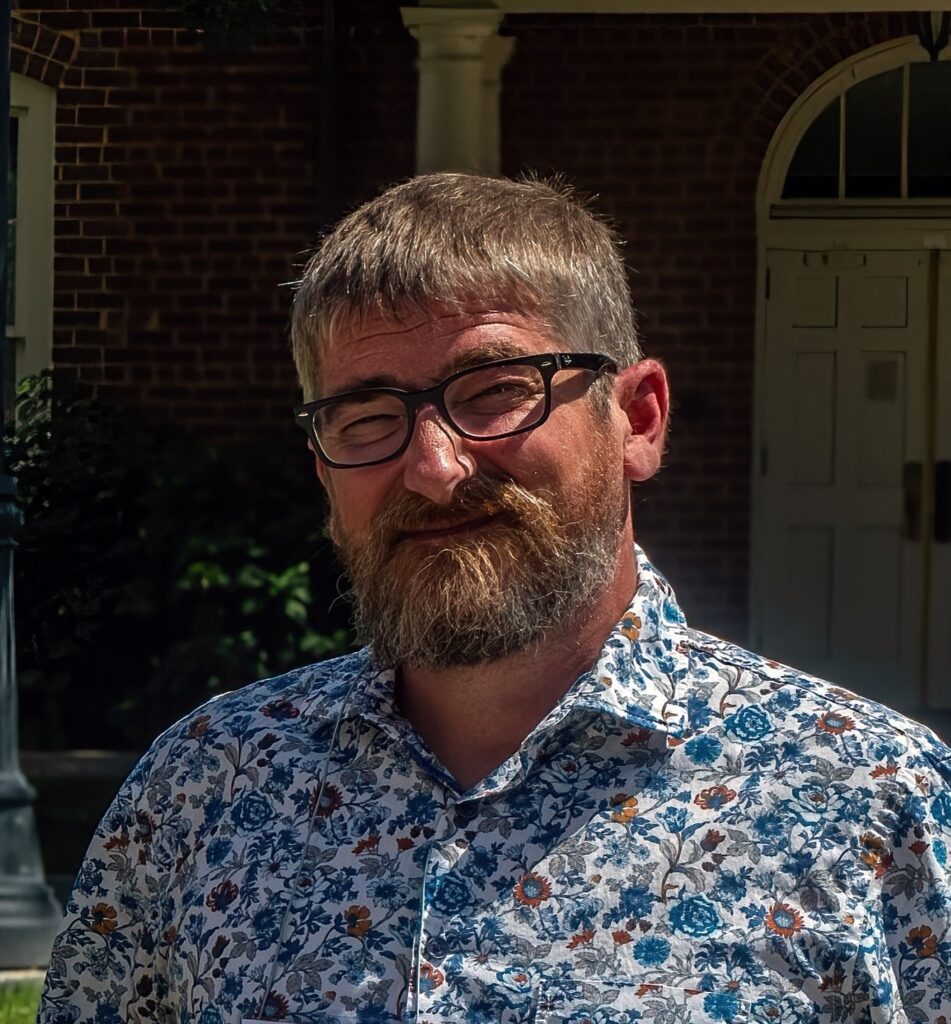
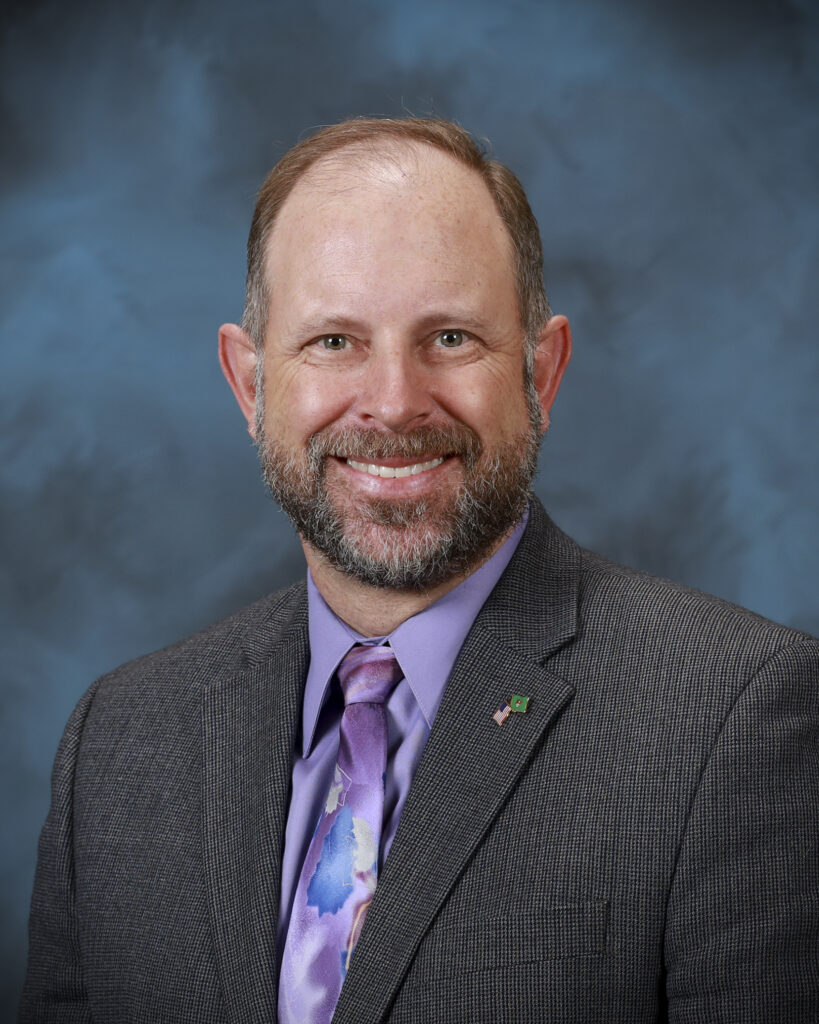
Dr. Nicholas Peters
Oak Ridge National Laboratory
Dr. Nicholas A. Petersreceived the B.A. degree summa cum laude in physics and mathematics from Hillsdale College in 2000 and the M.S. and Ph.D. degrees in physics from The University of Illinois Urbana-Champaign in 2002 and 2006, respectively. In 2006, he joined Telcordia Technologies as a Senior Research Scientist, later becoming a Senior Scientist at Applied Communication Sciences. In 2015, he joined Oak Ridge National Laboratory (ORNL) as Senior Research and Development Staff Member and strategic hire. From 2016-2021, he was appointed Joint Faculty Assistant Professor to The Bredesen Center for Interdisciplinary Research and Graduate Education at the University of Tennessee Knoxville. In 2017, he was appointed to lead ORNL’s quantum communications team. In 2019, he became the Group Leader for ORNL’s Quantum Information Science Group. In 2021, he was promoted to Distinguished Research and Development Staff and later that year, inaugural Section Head of the Quantum Information Science Section.
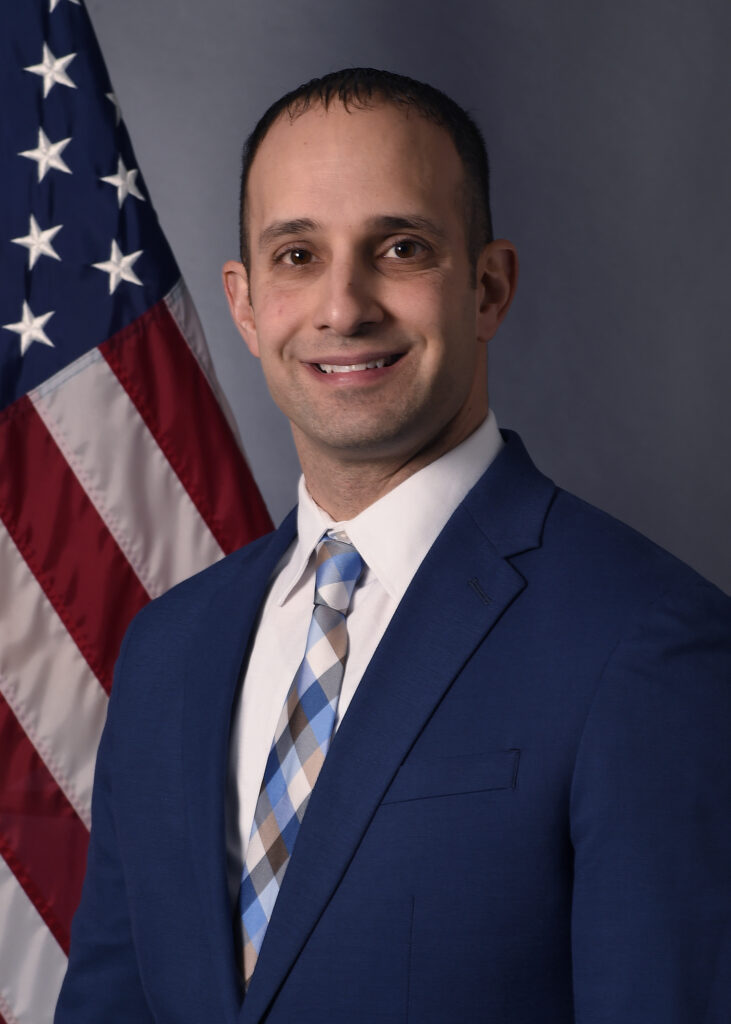
Dr. Matthieu Bloch
Georgia Tech
Matthieu R. Bloch is a Professor in the School of Electrical and Computer Engineering. He received the Engineering degree from Supélec, Gif-sur-Yvette, France, the M.S. degree in Electrical Engineering from the Georgia Institute of Technology, Atlanta, in 2003, the Ph.D. degree in Engineering Science from the Université de Franche-Comté, Besançon, France, in 2006, and the Ph.D. degree in Electrical Engineering from the Georgia Institute of Technology in 2008. In 2008-2009, he was a postdoctoral research associate at the University of Notre Dame, South Bend, IN. Since July 2009, Dr. Bloch has been on the faculty of the School of Electrical and Computer Engineering, and from 2009 to 2013 Dr. Bloch was based at Georgia Tech Lorraine. His research interests are in the areas of information theory, error-control coding, wireless communications, and cryptography. Dr. Bloch has served on the organizing committee of several international conferences; he was the chair of the Online Committee of the IEEE Information Theory Society from 2011 to 2014, an Associate Editor for the IEEE Transactions on Information Theory from 2016 to 2019 and again since 2021, and he has been on the Board of Governors of the IEEE Information Theory Society since 2016 and currently serves as the Senior Past President. He was an Associate Editor for the IEEE Transactions on Information Forensics and Security from 2019 to 2023. He is the co-recipient of the IEEE Communications Society and IEEE Information Theory Society 2011 Joint Paper Award, the 2025 IEEE Joy Thomas Tutorial Paper Award, and the co-author of the textbook Physical-Layer Security: From Information Theory to Security Engineering published by Cambridge University Press.
Session II: Quantum Computing Frontiers: Exploring Synergies with Materials, Sensing, and Networking
Quantum computing is rapidly evolving, intersecting with diverse fields that expand its potential and deepen our understanding. This series of sessions explores the dynamic interplay between quantum computing and key areas of science and technology. From leveraging quantum materials to build novel quantum devices, to harnessing qubits as sensitive probes for error detection, and pioneering distributed quantum computing through networking—each topic uncovers new opportunities and challenges. Join us to delve into how quantum computing both benefits from and drives innovation in materials science, sensing technologies, and networked quantum architectures, charting a path toward scalable, practical quantum systems.
Dr. Ryan Bennink
Oak Ridge National Laboratory
Dr. Ryan Bennink leads the Quantum Computational Science Group at Oak Ridge National Laboratory. With a Ph.D. in optics from the University of Rochester, Ryan joined ORNL in 2004 as a Wigner Fellow where he developed state-of-the-art entangled photon sources for quantum information science applications. For the past 15 years his research has covered a broad range of topics in quantum computer science including algorithms, properties of quantum circuits, characterization of hardware errors, modeling and simulation of fault tolerance, and resource analysis.
Dr. George Siopsis
University of Tennessee, Knoxville
Dr. George Siopsis is a Professor of Physics at the University of Tennessee and a leading researcher in quantum computing and quantum information science. He holds a Ph.D. in Physics, specializing in theoretical high-energy physics, from the California Institute of Technology (Caltech). His research spans quantum algorithms, quantum simulation, and quantum machine learning, with applications implemented on diverse quantum hardware platforms, including superconducting qubits (IBM Q), trapped-ion systems (IonQ, Quantinuum), and neutral atom arrays (QuEra). Dr. Siopsis also established a quantum optics laboratory in partnership with Oak Ridge National Laboratory to advance quantum communications and cryptography. His work is supported by the Department of Energy, National Science Foundation, DARPA, and other federal agencies. He is actively engaged in quantum workforce development and cross-sector collaborations to accelerate the transition from foundational research to scalable quantum
Session III: Quantum Sensing at Scale: From Engineered Materials to Intelligent Networks
Quantum sensing is evolving into a system-level science that spans materials, computing, and networking. Talks highlight advances in defect-engineered materials and integrated photonics that enable high-performance sensors with improved stability, bandwidth, and sensitivity. The discussion also covers how sensing data feeds into computational pipelines—supporting model-based control, benchmarking, and error mitigation for quantum technologies. Additionally, the role of sensing at the network edge is examined, where quantum photonic devices enable state-preserving transmission across fiber networks. Together, these perspectives showcase how co-design across domains is pushing the boundaries of scalable and intelligent quantum sensing platforms.
Dr. Mathieu Benoit
Oak Ridge National Laboratory
Dr. Mathieu Benoit graduated from the University of Montreal in 2008 with a master’s degree in Solid-State Physics, and from the University of Paris XI in 2011 with a Ph.D. in High Energy Physics. His doctoral work focused on the design, simulation, and characterization of hybrid planar pixel detectors for the ATLAS detector’s Insertable B-Layer upgrade at the Large Hadron Collider (LHC). From 2011 to 2020, he was based in Geneva, Switzerland, serving first as a Fellow in CERN’s Linear Collider Detector Group and later with the University of Geneva’s ATLAS group. His research has centered on instrumentation R&D for vertexing and tracking in future electron-positron and hadronic colliders. Over the years, Mathieu has built a strong reputation as an expert in the simulation, design, and characterization of various silicon detectors, including both hybrid and monolithic designs, and he is one of the main authors of the Allpix and Allpix² software frameworks for the simulation of semiconductor detectors. He later joined Oak Ridge National Laboratory (ORNL) as R&D staff in the Relativistic Nuclear and High Energy Physics Group, where his current work focuses on the development of LGAD and MAPS detectors for future nuclear and high-energy physics experiments. His research interests span from sensor simulation to characterization and readout, with an emphasis on new detector concepts offering precise timing and spatial resolution, as well as novel detector integration approaches that incorporate AI/ML techniques and high-bandwidth data transmission and processing methods.
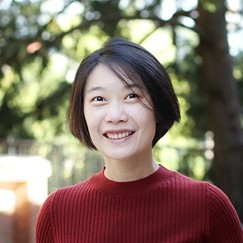
Dr. Yishu Wang
University of Tennessee, Knoxville
Yishu Wang is currently an Assistant Professor at the University of Tennessee at Knoxville, jointly appointed by the Departments of Materials Science and Engineering and of Physics and Astronomy. Before joining UTK in August 2022, she was a postdoctoral fellow of the Institute for Quantum Matter at The Johns Hopkins University. She obtained the Ph.D. degree in Physics from California Institute of Technology in 2018, M.S. degree in Physics from The University of Chicago in 2014, and a B.S. degree in Engineering Physics from Tsinghua University in 2013.
Session IV: Quantum Materials by Co-Design: Enabling Scalable Quantum Technologies
The emerging field of co-designed quantum materials plays a critical role in advancing quantum information science. Highlights include quantum phases such as fractional Chern insulators, quantum spin liquids, and chiral superconductors that host non-Abelian excitations essential for fault-tolerant quantum computing. Realizing these phases presents significant challenges, requiring integrated approaches that combine theory, synthesis, and characterization. The discussion also explores how ultrafast light–matter interactions can dynamically control and probe quantum materials, enabling new functionalities and enhanced quantum sensing. Featuring world-leading experts, the session showcases recent breakthroughs and co-design strategies aimed at creating scalable, high-performance quantum systems.
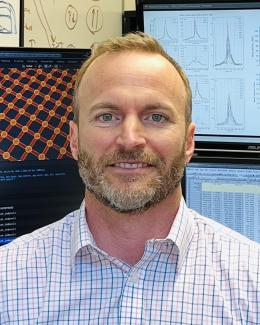
Dr. Zac Ward
Oak Ridge National Laboratory
T. Zac Ward, Ph.D., is a Senior Scientist and Group Leader of the Functional Hybrid Nanomaterials Group in the Center for Nanophase Materials Sciences at Oak Ridge National Laboratory (ORNL). He is an experimental condensed matter physicist whose research is focused on the design, synthesis, and characterization of new materials hosting electronic, magnetic, and optical phenomena relevant to future microelectronic and QIS device applications. He joined ORNL in 2009 as a Eugene P. Wigner Fellow. He is a member of the Journal of Applied Physics advisory board and serves on the American Association for the Advancement of Science’s Physics Section Steering Committee.
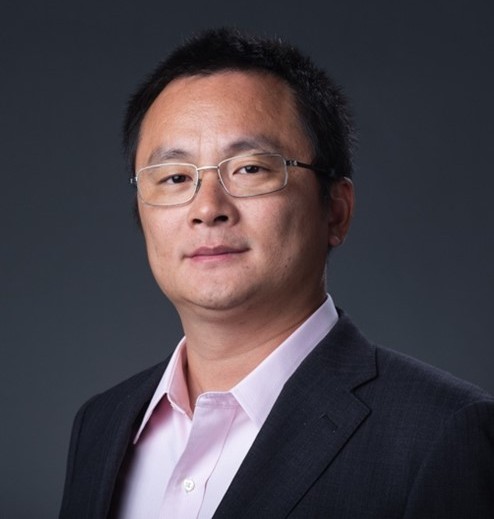
Dr. Shizeng Lin
Los Alamos National Laboratory
Shizeng Lin is a theorist specializing in condensed matter physics. He earned his Ph.D. from the University of Tsukuba and the National Institute for Materials Science in Japan. In 2011, Dr. Lin joined Los Alamos National Laboratory (LANL) as a postdoctoral researcher and became a staff scientist in 2014. Since 2022, he has also held a joint appointment as a scientist at the Center for Integrated Nanotechnologies (CINT), a DOE BES-funded user facility. Dr. Lin currently leads a research team investigating diverse frontiers in quantum materials. His contributions have been recognized with the LDRD Early Career Award and the Laboratory Fellow Prize for Outstanding Research.
Session V: Quantum Advantage for National Security
As quantum technologies rapidly evolve from theoretical constructs to operational capabilities, their implications for national security are profound and far-reaching. This session will explore how quantum computing, sensing, and communication are poised to transform defense, intelligence, and strategic deterrence. Experts from government, academia, and industry will discuss current initiatives, and the critical role of public-private partnerships in securing quantum leadership.
Craig Moss
Oak Ridge National Laboratory
Craig Moss is the Director for Defense and Homeland Security Programs in the National Security Sciences Directorate at the Department of Energy’s Oak Ridge National Laboratory in Tennessee. He is responsible for leading, coordinating, and implementing ORNL’s research and development efforts for national security challenges, including operational energy, climate security, and homeland security. Craig brings together the lab’s signature science capabilities — including advanced materials, clean energy, neutron science, nuclear sciences, and supercomputing — for national security applications. He has over 34 years of experience in national security, including 21 years in the Army prior to joining ORNL. Prior to joining the Oak Ridge National Laboratory in April 2011, he served as a Lieutenant Colonel in the US Army Medical Service Corps. His final assignment in the Army was as the Medical Chemical, Biological, Radiological, and Nuclear Defense Staff Officer at the Army Office of the Surgeon General. Prior to that, his assignments included the US Department of Homeland Security’s Domestic Nuclear Detection Office, the Command Health Physicist at the Pentagon Force Protection Agency; and Chief of Health Physics Operations at Walter Reed Army Medical Center. Craig holds a Master’s degree in radiological health physics from Oregon State University and a Bachelor of Science degree in physics from Austin Peay State University.
Dr. Donald Telesca
Air Force Research Laboratory
Dr. Donald Telesca received his Ph.D. from the University of Connecticut in condensed matter physics. He began working with the Air Force Research Laboratory (AFRL) in 2011, at the Space Vehicles Directorate in Albuquerque, NM. His research there focused on the development of radiation hardened electronics for space applications. In 2013, he moved to the AFRL Information Directorate in Rome NY, where he used his background in device physics to develop cyber hardened systems from the hardware layer, up. This work was focused on the application of computational diversity to cyber security. In 2019, he became the Branch Chief of the High Performance Computing branch, where he led a team of 21 researchers investigating novel/alternative computing architectures. In 2021, he became the Branch Chief of the Quantum Information Sciences & Technology branch, where he currently oversees a diverse research portfolio focused on developing a deployable heterogeneous quantum enabled network for future AF applications.