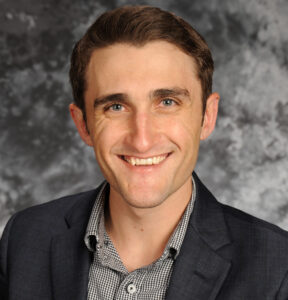
Dr. Zachary Prince is a MOOSE framework and Prometheus project developer at Idaho National Laboratory (INL). He received his PhD from Texas A&M university in 2019, where his research involved numerical methods for reactor physics including reactor dynamics and reduced order modeling. During Dr. Prince’s first four years at INL, he was a developer of the reactor analysis application: Griffin. Subsequently, he spent a year at TerraPower serving as lead developer and custodian for their python-based neutronics software. Over the past year, Dr. Prince has been on the MOOSE team leading the stochastic tools module. Most recently, he has been leading the modeling and simulation for the Genesis mission’s Prometheus project; developing artificial intelligence agents for high-fidelity physics simulations with MOOSE and workflows for reactor design and licensing.
Presentation Title:
Prometheus – Nuclear Energy Faster, Safer, Cheaper
Presentation Abstract:
Prometheus is an AI moonshot to make nuclear energy faster, safer, and more affordable by accelerating the design, licensing, manufacturing, construction, and operation of nuclear power plants and fuel-cycle facilities. The platform coordinates purpose-built AI agents within a governed hypothesizer-analyzer-verifier architecture, supported by nuclear-domain data, specialized engineering tools, physics-informed surrogate models, and a persistent knowledge graph and digital twin. Human-in-the-loop governance, cyber assurance, and benchmarking against conventional workflows are embedded throughout the platform. Prometheus spans five integrated workstreams: platform infrastructure; design and licensing; manufacturing and construction; autonomous operations; and data curation. It also federates with DOE’s broader Genesis Mission Platform and engages national laboratories, universities, AI developers, and nuclear industry partners to accelerate deployment. Together, these capabilities aim to reduce engineering iteration time and cost while preserving traceability, evidence, and expert oversight. This presentation introduces Prometheus and highlights early demonstrations of automated component design and surrogate modeling.