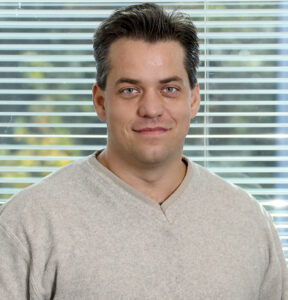
Rick is the Group Leader of the Data Analysis and Machine Learning Group at ORNL. I also serve as ORNL’s point of contact for the FASTMath Institute, a long-running mathematics institute within the Scientific Discovery through Advanced Computing (SciDAC) program, a DOE initiative launched in 2001. My work supports the Genesis mission, including the development of digital twins for fusion and AI/ML at the edge for nuclear physics experiments. My research interests include foundational machine learning at scale, data reconstruction and analysis, high-performance computing, uncertainty quantification, and data-driven methods for complex scientific and engineering challenges.
Presentation Title:
Digital Twins for the Material Plasma Exposure eXperiment (MPEX)
Presentation Abstract:
The Materials Plasma Exposure eXperiment (MPEX) device, currently under construction at Oak Ridge National Laboratory, began initial operations in December 2026. The goal of MPEX is to provide plasma fluence and heat flux, at fusion reactor levels, for continuous pulses lasting up to two weeks, to assess the damage to divertor target materials. The design of MPEX was guided by an integrated physics modeling workflow that has continued to be improved during construction. A proto-type, namely proto-MPEX, was built to verify the Helicon plasma source, ion cyclotron heating (ICH), and electron cyclotron heating (ECH) plasma heating designs. Over 14,000 discharges were run in proto-MPEX. To help achieve the design goals of MPEX an MPEX-AI-Hot-Spot Controller is being trained with experimental data from proto-MPEX, and physics model simulations. The controller consists of a machine learning (ML) map of the control actuators (magnetic field coil currents, fueling gas puff, RF heating) to the distribution of plasma heat on the target and on the Helicon window, or other unwanted locations. Once this ML map is learned, an artificial intelligence (AI) AI-agent finds the optimum control settings to maximize the plasma directed to the target while minimizing hot spots elsewhere. A trained proto-MPEX-AI Hot-Spot Controller will be verified on proto-MPEX with only Helicon heating. A second goal is to build an MPEX-AI Damage Assessment Digital Twin. Training this model will require physics model simulation, and experimental data, of the full range of material damage from the plasma and heat fluxes in MPEX. As a first step, an E-BEAM AI Damage Assessment Digital Twin is being trained using experimental data from the JUDITH1 E-BEAM facility at Forschungszentrum Juelich IFN and simulated data using the CabanaPD code. First a ML model is trained that maps between the damage assessment (cracking patterns due to high heat flux ) and the microstructure grain boundary characteristics of the different grades of tungsten targets. An AI-agent then finds the optimum tungsten characteristics for a weighted damage assessment. This report is on work performed for the MPEX-AI Digital Twins project. Details are given in the progress report.