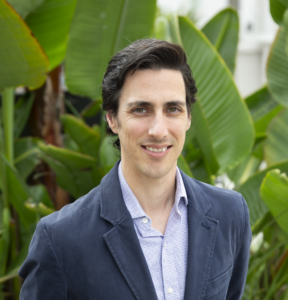
Garrett Prechel is a technical founder, software architect, and plasma physicist with over a decade of experience bridging software, hardware, and media. His work ranges from software engineering to autonomous systems to running a media company. He now serves as technical lead of the DIII-D Digital Twin and an ORAU postdoctoral researcher at the DIII-D National Fusion Facility, where he combines that entrepreneurial drive with deep expertise in mathematical modeling and high-performance computing to architect the twin’s HPC and AI backbone in service of DOE’s Integrated Research Infrastructure vision. He holds a Ph.D. in plasma physics from UC Irvine and thrives at the intersection of product and people management, cutting edge research, and system architecture.
Presentation Title:
The DIII-D Digital Twin: Uniting AI Surrogates, Experimental Data, and DOE HPC for Fusion Operations
Presentation Abstract:
The DIII-D digital twin unites experiment, AI and high-performance computing in an interactive replica of the national fusion facility. Machine-learning surrogates for plasma equilibrium, wall heat-loading, radiated-power tomography and impurity-anomaly detection stream synchronized results into NVIDIA Omniverse and other front-end clients. Driven by live and archival data and a virtual plasma control system, the DIII-D digital twin delivers scenario planning capabilities to physics operations daily. A distributed orchestration layer runs these services across local, remote, and HPC resources using American Science Cloud resources, with full playback and scrubbing control. Beyond single-shot replay, a batch capability dispatches ensembles of plasma-control simulations to NERSC and ALCF via Globus Compute. This exercises the DOE’s Integrated Research Infrastructure vision and returns results to the twin for LLM powered query and visualization. We present the architecture and current capabilities and discuss the path toward between-shot and real-time predictive applications for fusion operations.