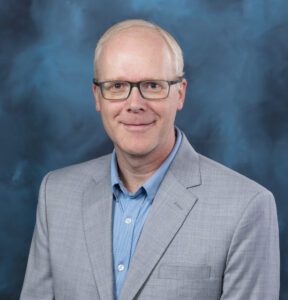
Dr. Craig A. Bridges is a Researcher in the Nanomaterials Chemistry Group in the Chemical Sciences Division at Oak Ridge National Laboratory in Oak Ridge, Tennessee. Before joining ORNL as a staff member in 2007, he worked as a Post-Doctoral Researcher in the Department of Chemistry at the University in Liverpool, UK. Dr. Bridges has a Ph.D. degree in Solid State Chemistry from the Department of Chemistry at McMaster University in Hamilton, Canada. He obtained a B.S. in Chemistry from the University of Alberta. Dr. Bridges has research interests in areas including quantum materials, electrochemical energy storage, electronic properties, neutron detection, neutron scattering, diffraction, crystal structure solution, and nanoscale effects in materials design. His current main focus is on the development of novel inorganic materials in the areas of quantum materials, electrode and solid electrolytes for battery and solid oxide fuel cell (SOFC), and the reactions that occur at interfaces in electrochemical energy storage systems. He is further developing AI directed automation solutions for chemistry that will enhance research. Dr. Bridges has over 100 publications, 7 approved patents and several pending applications, and is a member of the ACS, ACA and Electrochemical Society.
Presentation Title:
AI-driven Materials Synthesis and Agentic Characterization at the ACL
Presentation Abstract:
With the advent of the national Genesis Mission initiative, the DOE intends make a leap into the future with the development of advanced automation that can couple AI driven insights with experiment. The Genesis mission goal is to at least double the productivity and impact of U.S. research and innovation within a decade, focusing on breakthroughs in energy, discovery science, and national security. A key challenge in this transformational change is the complexity and novelty of these methods the further that the human is removed from the loop. For the Autonomous Chemistry Lab (ACL) at ORNL this means rapid, continuous and reproducible synthesis workflows connected with agentic tools over the ORNL ecosystem and beyond. Here we discuss some of the latest research from the ACL. Examples of particular areas of interest include a closed loop polymer synthesis workflow, and separately autonomous X-ray diffraction analysis for characterizing the synthesis of inorganic solid-state materials. We discuss agentic driven analysis, which uses a rubric-driven LLM judge to evaluate the agent and a meta-optimizer to iteratively modify its prompts, tools, and code until it satisfies predefined acceptance criteria, while preserving provenance and a stable interface across future model changes. The philosophy for diffraction analysis and its implications for feedback to the synthesis will be explored, as well as the software ecosystem based upon the principles of the INTERSECT project at ORNL, which provides a messaging and data service for transmitting and storing data across the internal network.