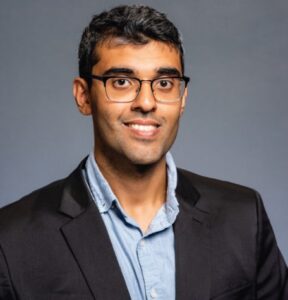
Archit Vasan is a computational scientist at Argonne National Laboratory with a background in computational biophysics. His research interests involve the discovery of cancer therapeutics using generative AI, reinforcement learning, and molecular simulations coupled to exascale computing.
Archit received a BA in Physics and Mathematics from Austin College in 2016. He then received his PhD in Biophysics from the University of Illinois at Urbana-Champaign in 2023 under the guidance of Dr. Emad Tajkhorshid.
Presentation Title:
Reinforcing experimental preferences for protein design at scale
Presentation Abstract:
The intersection of artificial intelligence and biological systems presents unprecedented opportunities to accelerate the design and optimization of complex biosystems, from individual proteins to entire metabolic networks. We have developed an integrated platform that combines protein and genome-scale language models with automated experimental protocols and robotics to enable rapid iteration between computational prediction and experimental validation. Our approach features automated co-scientists that couple reasoning models with bioinformatics workflows, allowing for real-time refinement of experimental designs and model predictions based on intermediate experimental outputs. Through multimodal representations that integrate gene, protein, systems, and pathway information, we have successfully accelerated the experimental validation of novel malate dehydrogenases, enhanced substrate binding capabilities in the vanAB enzyme complex, and designed biologics targeting key cancer signaling pathways. This integrated AI-automation pipeline demonstrates 10-100x speedup in design space exploration compared to traditional approaches, fundamentally transforming the timescales of biosystems engineering. These advances represent a paradigm shift toward autonomous biological design, where AI-driven hypothesis generation, experimental execution, and iterative refinement converge to unlock new possibilities in synthetic biology and therapeutic development.