Abstract:
Machine learning (ML) methods have garnered significant interest as potential approaches for constructing surrogate models of complex engineering systems for which traditional simulation is computationally expensive. However, in many scientific and engineering applications, training data are scarce because of the high cost of generating data from traditional high-fidelity simulations. ML models trained on limited data often yield unreliable predictions outside the regime represented by the training data.
This talk presents multifidelity training approaches for ML that exploit scientific settings in which data of varying fidelities and computational costs are available. For example, high-fidelity data may be generated by an expensive, fully resolved physics simulation, whereas lower-fidelity data may be obtained from a less computationally expensive model based on simplifying assumptions. Two recent approaches developed in the speaker’s research group for multifidelity training are highlighted: one based on linear regression and another based on nonlinear autoregressive Gaussian process regression. The performance of these approaches is demonstrated on problems arising in the modeling of reacting flows.
Speaker’s Bio:
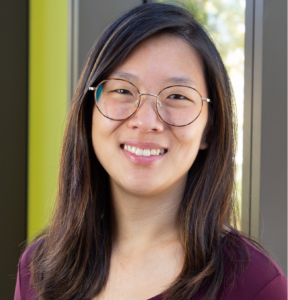
Dr. Elizabeth Qian holds a joint appointment at the Georgia Institute of Technology as an Assistant Professor in the School of Aerospace Engineering and the School of Computational Science and Engineering. Her interdisciplinary research focuses on developing computational methods that enable engineering design and decision-making for complex systems. Her research specialties include the development of efficient surrogate models through model reduction and scientific ML, as well as multifidelity approaches for accelerating expensive computations in uncertainty quantification, optimization, and control.
Dr. Qian previously held a postdoctoral appointment as a von Kármán Instructor in the Department of Computing + Mathematical Sciences at the California Institute of Technology. She earned her Doctor of Philosophy, Master of Science, and Bachelor of Science degrees from the Department of Aeronautics and Astronautics at the Massachusetts Institute of Technology. Her awards and honors include a Caltech-wide teaching award selected by the undergraduate student body, the 2020 Society for Industrial and Applied Mathematics Student Paper Prize, a Fannie and John Hertz Foundation Fellowship, a National Science Foundation Graduate Research Fellowship, and a United States Fulbright Student grant. She currently holds a visiting faculty appointment as a Hans Fischer Fellow at the Technical University of Munich.
Host:
Pablo Seleson, [email protected], 865-323-2859
About the Mathematics in Computation (MiC) Talk Series:
MiC talks are held every Thursday from 3:00 – 4:00 p.m. Eastern Time and are open to the public.
To subscribe to the MiC Talks mailing list, please contact Celeste Mudrich [email protected].
To see the full list of previous and upcoming seminars, go to https://events.ornl.gov/mictalks/.
The MiC Talks series is a venue for the state of the art in mathematics in computation. The series also fosters collaboration, inspires new research directions, and showcases advances in the use of mathematics and computation in the service of science and engineering.
If you are interested in giving a talk, please contact a member of the MiC Seminar committee.
Elaine Wong, [email protected], 865-341-2325
Pablo Seleson, [email protected], 865-323-2859
Pablo Mariano Salazar, [email protected], 865-341-2768
Viktor Reshniak, [email protected], 865-341-4394