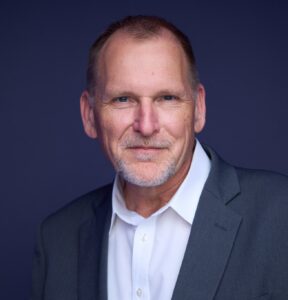
Robert Wagner is the associate laboratory director for the Energy Science and Technology Directorate (ESTD) at Oak Ridge National Laboratory (ORNL). In this role, he leads more than 550 researchers and operations staff focused on developing advanced technology solutions in manufacturing, buildings, transportation, and grid and energy infrastructure. He also leads ORNL’s Next Generation Data Center Initiative (NGDCI), a cross-lab effort to advance energy-efficient, resilient, and secure infrastructure for AI-driven data centers.
He and his team steward four U.S. Department of Energy national user facilities including the Building Technologies Research and Integration Center (BTRIC), Carbon Fiber Technology Facility (CFTF), Manufacturing Demonstration Facility (MDF), and the National Transportation Research Center (NTRC). The directorate also stewards the Grid Research Innovation and Development Center (GRID-C). These facilities enable strong collaborations that drive fundamental scientific research toward practical solutions to the nation’s energy challenges, ensuring a more resilient, secure, and affordable energy future.
A first-generation college graduate, Robert came to ORNL as an undergraduate student in 1992 and advanced through multiple levels of leadership at the laboratory while building a distinguished career as a globally recognized transportation and combustion researcher. He earned bachelor’s, master’s, and doctoral degrees in mechanical engineering from the Missouri University of Science and Technology. He is a fellow of the American Association for the Advancement of Science, the Society of Automotive Engineers (SAE) International, and the American Society of Mechanical Engineers (ASME) and was awarded the SAE International Medal of Honor and the ASME George Westinghouse Gold Medal. Robert also graduated from the DOE Oppenheimer Science and Energy Leadership Program and serves as the chair of the Oppenheimer Leadership Network.
He is a former director of the NTRC and was a leader and founding member of DOE’s Co-Optimization of Fuels and Engines initiative. Co-Optima brought together the expertise of nine national laboratories, more than 20 universities, and two DOE program offices.